
Intentional Landings on Rough Terrain and at High Altitude: Are You Flying the Right Parachute?
Parachute Laboratories, Inc. | Technical Discussion & Canopy Flight Education
Based on a technical presentation by Nancy LaRiviere, USPA Instructor/Examiner, national and international competitor, and contributor to parachute education at Parachute Laboratories.
Every landing is an accuracy landing. The question is whether you have prepared for it. Most skydivers spend considerable time discussing freefall skills, canopy performance, deployment characteristics, and landing techniques. Yet one of the most important considerations in parachuting is often overlooked: What happens when the intended landing area is anything but ideal?
Whether landing on rocky terrain, uneven ground, mountainous environments, high-elevation drop zones, or confined landing areas, the equipment we select and the techniques we practice can significantly influence the outcome.
At Parachute Laboratories, we believe that understanding canopy performance under challenging conditions is essential to improving parachutist safety.
Let's examine some of the technical considerations involved in intentional rough-terrain and high-altitude landings.
1. Is Your Parachute Designed for the Landing Environment?
One of the most important principles in parachute selection is that no single canopy design is ideal for every mission.
Many modern sport parachutes emphasize forward speed, maneuverability, glide performance, and responsive handling. These characteristics have advantages, but they are not necessarily desirable when attempting to land in a small, uneven, or obstacle-filled area.
Traditional precision accuracy parachutes were developed around a different set of priorities.
These canopies typically feature:
A seven-cell configuration with a relatively low aspect ratio.
A thick airfoil designed to support low-speed flight.
Low wing loading, often approximately 0.5–0.65 pounds per square foot.
Stable, controllable descent characteristics in deep brakes.
Specialized design features that may improve stability during low-speed approaches.
Some accuracy parachutes incorporate split stabilizers and lower-surface ports, sometimes referred to as soft cells. These features are intended to improve airflow management and stability under certain conditions.
Why does this matter?
Because when landing on rough terrain, minimizing horizontal ground speed and maintaining precise control of the touchdown point can be more important than maximizing forward performance.
An appropriately designed accuracy canopy can provide a controlled, steep approach with relatively little forward travel.
However, these characteristics cannot be assumed for every parachute. Deep-brake stability, stall margins, control response, and recovery behavior vary significantly between canopy designs.
Discussion question: Have we become so focused on forward speed and landing performance that we sometimes overlook the advantages of slower, more stable parachute designs?
2. Wing Loading: Is Bigger Sometimes Better?
Wing loading is frequently discussed in the context of speed, canopy responsiveness, and performance.
But what happens when we apply those discussions to rough terrain or high-density-altitude environments?
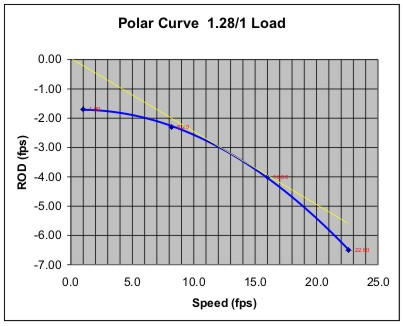
The original presentation identifies traditional accuracy canopy wing loadings of approximately 0.5–0.65 pounds per square foot, with somewhat higher wing loadings potentially suitable under certain conditions.
It also describes successful Parachute Laboratories testing at wing loadings as low as 0.3 pounds per square foot.
These examples illustrate an important point: Lower wing loading can be a deliberate engineering and operational choice rather than simply a reflection of a jumper's experience.
A larger canopy, appropriately configured for the application, can provide several potential advantages, including reduced descent rates and lower landing speeds.
However, lower wing loading also changes how a parachute behaves in wind, turbulence, and penetration against headwinds.
The mission must determine the equipment.
A parachutist who needs to travel considerable horizontal distance after deployment may require different canopy characteristics from someone whose primary objective is to descend into a confined landing area.
Discussion question: When evaluating parachute performance, are we giving enough consideration to the actual landing environment, or are we allowing recreational canopy trends to influence equipment decisions that require different priorities?
3. Precision Accuracy: A Skill Worth Preserving
Before high-performance landings became a major focus of recreational canopy flight, classic precision accuracy was a fundamental parachuting discipline.
Its objective was deceptively simple: Land on a designated point with repeatable precision.
Achieving that objective requires considerably more than steering toward a target.
A traditional precision accuracy jump can be divided into six elements:
Spotting: Establishing an appropriate exit point and aircraft run-in based on wind and landing requirements.
Maneuvering: Evaluating the wind and positioning the parachute relative to the intended target.
Circuit: Establishing a predictable landing pattern that accounts for wind and available altitude.
Approach Zone: Entering the final approach with appropriate positioning, altitude, and control authority.
Power Zone: Managing the canopy's glide and descent characteristics while maintaining sufficient airflow and control.
Sink Zone: Executing the final controlled descent to the designated landing point using techniques appropriate to the specific canopy.
The presentation describes a traditional three-angle approach, in which a specialized accuracy canopy transitions through its approach, power, and sink zones.
This is a learned skill requiring specific equipment, training, and a thorough understanding of the canopy's flight envelope. It is not a technique that should be directly transferred to an unfamiliar or high-performance sport canopy.
Nevertheless, the underlying lessons apply broadly.
Understanding wind drift, recognizing changes in the apparent position of the target, managing altitude, and maintaining a disciplined landing plan are useful skills regardless of parachute type.
Every parachutist should be able to answer a basic question: Can you consistently land where you intend to land without relying entirely on the canopy's flare performance?
That question becomes particularly important when obstacles surround a landing area.
4. Rough Terrain: Protective Equipment Matters
Canopy selection is only one part of the equation.
The equipment worn by the parachutist also plays a significant role.
Smokejumpers provide a useful example of equipment developed around landing in challenging environments.
Their protective clothing incorporates features intended to reduce injury exposure during landings in forests, uneven terrain, and other difficult environments.
Common considerations include padding, head and neck protection, durable clothing, and footwear with appropriate ankle support.
Yet protective equipment always involves trade-offs.
Heavier or more restrictive clothing can limit movement, visibility, or dexterity. High-altitude operations can also introduce significant thermal exposure.
Equipment selection therefore requires balancing environmental protection with the ability to safely operate the parachute system.
An appropriate parachute landing fall (PLF) remains an important emergency landing skill. Protective clothing reduces certain risks but cannot eliminate them.
Discussion question: How often do recreational jumpers practice PLFs after completing their initial training, and should refresher training receive greater emphasis?
5. The Mountain Doesn't Care About Your Experience
Mountainous terrain presents challenges that may not be obvious from the air.
Wind interacting with ridgelines, slopes, and terrain features can create rapidly changing conditions, including updrafts, downdrafts, turbulence, and rotor activity.
The original presentation identifies the windward side of a mountain as generally preferable to the leeward side when a slope landing cannot be avoided.
There is an aerodynamic reason for this observation.
Airflow over mountainous terrain can produce significant lee-side turbulence and descending air. However, windward slopes can also produce hazardous conditions, and terrain effects cannot be reduced to a simple universal rule.
The critical consideration is understanding the actual wind and terrain conditions before committing to a landing area.
A parachutist descending toward a mountain may encounter an environment considerably different from conditions measured at a nearby airport or valley.
Accurate weather information, local knowledge, and appropriate operational limitations are essential.
Sometimes the correct decision is not to jump.
Experience does not eliminate atmospheric hazards.
Discussion question: Should specialized mountain and rough-terrain canopy training become a more established part of advanced parachutist education?
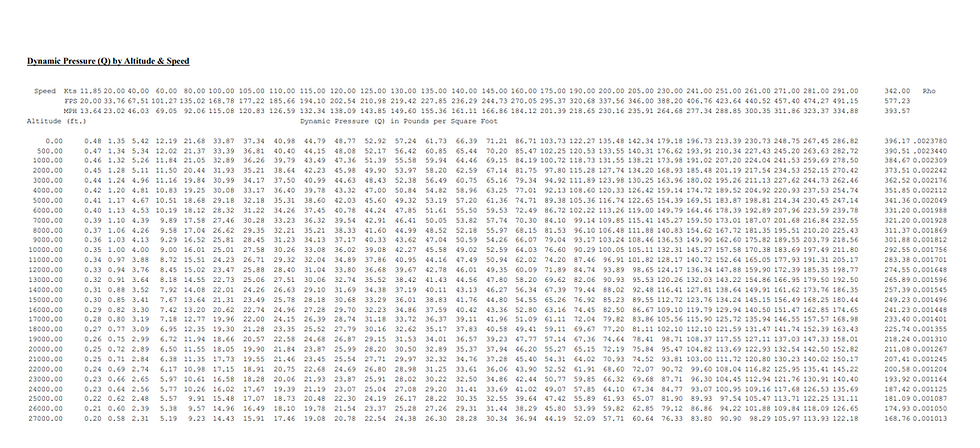
6. Density Altitude: Why the Same Canopy Can Land Differently
One of the most important technical subjects in the original presentation is density altitude.
Density altitude describes the atmospheric conditions that determine how dense the air effectively is relative to the standard atmosphere.
It is influenced principally by pressure altitude and temperature, with humidity also contributing.
As density altitude increases, air density decreases.
For parachute operations, this has direct consequences.
A ram-air parachute flying at a similar aerodynamic condition in less-dense air generally requires a higher true airspeed to generate comparable aerodynamic forces.
That means a parachute may approach the ground with greater speed and an increased descent rate compared with its performance under lower-density-altitude conditions.
For example, a canopy that produces a comfortable landing at a low-elevation drop zone may behave noticeably differently at a high-elevation location on a hot day.
The wing loading has not changed.
The canopy has not changed.
The jumper has not changed.
The atmosphere has changed.
This is especially important when evaluating landing speed, flare performance, obstacle clearance, and available landing distance.
A larger canopy may be appropriate for certain high-density-altitude missions, but selecting equipment requires a complete evaluation of loading, terrain, wind, canopy characteristics, and operational requirements.
Simply flying the same equipment and expecting the same landing behavior can be a costly assumption.
Discussion question: How many parachutists actively calculate or evaluate density altitude before jumping at an unfamiliar drop zone?
7. Planning the Landing Before Leaving the Aircraft
One of the recurring themes in the presentation is the importance of having a flight plan.
A well-considered canopy flight plan helps the jumper remain mentally ahead of changing conditions rather than reacting at the last moment.
Planning should consider the intended landing area, winds at different altitudes, alternate landing options, traffic, obstacle locations, and the performance characteristics of the parachute.
The plan must also remain flexible.
Wind can change.
The exit point may not be ideal.
Other parachutists may affect the intended approach.
An alternate landing area may become necessary.
The objective is not to rigidly follow a predetermined path regardless of conditions. It is to make deliberate decisions using the information available.
In group operations, exit separation, different wing loadings, descent characteristics, and canopy traffic must also be considered.
Small landing areas amplify the consequences of poor traffic management.
The best landing technique is of little value if the jumper is forced into an avoidable canopy conflict.
8. Mental Preparedness: The Variable We Often Underestimate
Equipment and technique receive considerable attention, but mental preparedness can be equally important.
The original presentation emphasizes the value of controlled breathing, emotional regulation, situational awareness, and remaining focused on the task.
A parachutist who becomes overwhelmed by an unexpected situation may fail to recognize available options or may make abrupt, poorly considered control inputs.
A prepared parachutist is better positioned to evaluate changing conditions, maintain awareness, and execute a previously practiced response.
This is one reason repetitive accuracy training can be valuable.
By developing familiar routines and sound decision-making habits, the jumper can reduce the cognitive workload associated with demanding landings.
Mental preparedness does not eliminate risk, but it can support better decisions when time and altitude are limited.
9. Every Jump Is an Opportunity to Improve
One of the strongest lessons from Nancy LaRiviere's presentation is that every jump offers an opportunity to develop accuracy and canopy control skills.
Whether flying a traditional seven-cell accuracy parachute, a modern nine-cell sport canopy, or a specialized military system, the parachutist should understand the equipment being used and the conditions in which it will operate.
That includes knowing what the parachute can do, recognizing what it cannot do, and avoiding techniques that exceed the jumper's experience or the equipment's operating envelope.
Precision accuracy should not be viewed solely as a competition discipline.
It is also a foundation for better canopy awareness, better planning, and more deliberate landings.
The ability to consistently put a parachute where intended, within the limitations of the canopy and environmental conditions, is a skill worth developing.
Final Thoughts: Equipment, Environment, and Experience Must Work Together
At Parachute Laboratories, more than 57 years of parachute development and manufacturing history have reinforced a fundamental engineering principle:
The right equipment must be matched to the mission, the environment, and the person operating it.
A parachute designed for one application may not be suitable for another. The landing characteristics desirable for recreational sport parachuting may be different from those required for precision accuracy, military operations, or specialized rough-terrain landings.
Equally important, equipment cannot replace proper training, sound judgment, or preparation.
Whether you're a recreational skydiver, military parachutist, smokejumper, instructor, or parachute rigger, understanding the relationship between canopy design, atmospheric conditions, and landing technique makes you a more informed participant in the industry.
Join the Discussion
We would like to hear from parachutists, canopy instructors, riggers, and equipment manufacturers.
Have you experienced significant differences in canopy performance when jumping at higher elevations or under high-density-altitude conditions?
Do you believe classic precision accuracy skills deserve greater emphasis in modern canopy training?
What canopy characteristics do you consider most important when selecting equipment for confined or rough-terrain landing areas?
Should parachutists receive more specialized instruction in terrain-related wind hazards and nonstandard landing environments?
Share your experience in the comments. Technical discussion and the exchange of practical knowledge help move our industry forward.
Technical acknowledgment: This discussion was adapted from Nancy LaRiviere's presentation, "Intentional Landings on Rough Terrain or High Altitude." Her contributions to precision accuracy, canopy flight education, and parachute knowledge are recognized and appreciated.
Safety note: This article is intended for general technical education and discussion. It is not a substitute for supervised canopy instruction, manufacturer-approved operating procedures, or mission-specific training. Descent and landing techniques must be appropriate for the equipment, environmental conditions, and parachutist's qualifications.
Nancy LaRiviere, USPA I/E, Tandem Examiner, Master Rigger, DPRE, Commercial, Multi-Engine Pilot, National Champion, Double Bronze Medalist 2003 World Championships, Multi-time U.S. Nationals Medalist and U.S. Team Member, Holder of 13 World Records, 6800 jumps, Canopy 102 Coach, President of Parachute Labs, Inc.

Comments